 Spanish
TL;DR:
- Learning Spanish in Singapore is achievable through structured instruction that emphasizes real-world communication and focused speaking practice. Despite the lack of immersion, goal-oriented classes, expert feedback, and consistent effort allow learners to develop practical proficiency across all skills. Utilizing online resources, community events, and micro-immersion routines can accelerate progress without leaving the island.
Learning Spanish in Singapore might seem like an uphill battle when Spanish isn’t spoken on the streets, in hawker centers, or on local television. But that assumption deserves a hard challenge. Structured instructional models can improve Spanish speaking outcomes even in non-immersive settings, meaning geography is far less of a barrier than most people assume. With the right approach, a consistent schedule, and quality instruction, learners in Singapore can build real, usable Spanish skills without ever leaving the island.
Table of Contents
- What does ‘understanding Spanish’ really mean?
- Why structured learning outperforms self-study
- Overcoming common challenges in Singapore
- From classroom to real conversation: making Spanish practical
- Why non-immersive learning works better than you think
- Take the next step with Spanish in Singapore
- Frequently asked questions
Key Takeaways
| Point | Details |
|---|---|
| Structured classes work | Empirical studies confirm structured education accelerates Spanish understanding even in Singapore. |
| Clarity of goals matters | Defining your purpose—conversational, academic, or professional—improves outcomes. |
| Tackle local challenges | Singaporean learners can overcome non-immersion barriers through targeted practice and support. |
| Real conversation is the goal | Applying Spanish beyond textbooks builds confidence and lasting proficiency. |
What does ‘understanding Spanish’ really mean?
Before mapping out how to learn, it’s worth getting clear on what “understanding Spanish” actually means. Many learners start out with a vague goal like “I want to learn Spanish,” which is a bit like saying “I want to get fit” without deciding whether you’re training for a marathon or just wanting to climb stairs without losing breath. The goal shapes the method.
Spanish competence actually spans several distinct levels, each requiring different skills and study habits:
- Survival Spanish: Ordering food, asking for directions, counting, and basic greetings. Achievable in weeks with focused effort.
- Conversational Spanish: Holding back-and-forth exchanges, discussing opinions, and navigating social situations comfortably. This typically takes months of consistent practice.
- Academic Spanish: Reading literature, writing essays, and understanding regional dialects and grammatical nuances. This is the level that aligns with formal qualifications like DELE (Diplomas de Español como Lengua Extranjera).
- Professional Spanish: Using the language in business meetings, negotiations, or specialized fields such as medicine, law, or finance.
Each level involves all four skill pillars: listening, speaking, reading, and writing. A learner who can read a Spanish article but freezes during a phone call has a skills gap that study alone won’t fix. Genuinely understanding Spanish means being able to function across these modes, not just excel in one.
| Level | Skills involved | Typical timeline |
|---|---|---|
| Survival | Speaking, listening | 4 to 8 weeks |
| Conversational | All four skills, basic grammar | 6 to 18 months |
| Academic (DELE B2) | Advanced grammar, writing, reading | 2 to 3 years |
| Professional | Domain-specific vocabulary, nuance | 3 or more years |
One thing that often surprises learners is how much context matters. Structured instructional models focus on real-world communication rather than rote grammar, which means the best classes are designed around situations you’ll actually encounter. It’s also worth noting that Spanish varies significantly by region. Whether you’re preparing to work in Latin America or planning a trip to Spain, understanding those differences early on shapes your vocabulary choices, accent exposure, and cultural knowledge. A quick look at Latin American vs Spain Spanish can help you decide which variant fits your goals from day one.
“Knowing why you want to learn Spanish is just as important as knowing how to learn it. Without a clear goal, even the best curriculum won’t stick.”
Setting an honest, specific goal at the start of your learning journey is one of the highest-impact decisions you can make. It determines your study schedule, which course type suits you, and how you’ll measure progress.
Why structured learning outperforms self-study
Apps, YouTube videos, and podcasts have made language learning more accessible than ever. But accessible doesn’t always mean effective. Most people who rely purely on self-study plateau after a few months, usually around the point where basic phrases are memorized but real conversations still feel impossible.
Structured learning solves this with three things self-study almost never provides: feedback, accountability, and interaction. A language app won’t correct the subtle mistake in your sentence structure that confuses native speakers. A podcast can’t ask you a follow-up question. And a textbook can’t notice that you consistently mispronounce a vowel sound that changes the meaning of what you’re saying.
A study involving 20 Singaporean students using a flipped-learning model, where students reviewed materials before class and used class time for active speaking practice, showed measurable improvement in speaking scores. This isn’t a minor footnote. It’s evidence that even a small, deliberate shift in how instruction is delivered can produce real gains.
Here are the core elements that make a structured Spanish course more effective than going it alone:
- Curriculum design: A well-built course sequences vocabulary, grammar, and speaking practice in a logical order so you’re never confused about what to study next.
- Qualified instructors: Native Spanish teachers bring authentic pronunciation, natural phrasing, and cultural context that no app can replicate.
- Active speaking time: Classes designed around conversation, not lectures, force you to produce language rather than just consume it.
- Progress tracking: Regular assessments show where you’re strong and where you need to focus so you’re not wasting time.
- Peer interaction: Practicing with classmates creates low-stakes, high-frequency speaking opportunities that closely mimic real conversations.
| Learning method | Feedback | Accountability | Speaking practice | Structured progress |
|---|---|---|---|---|
| Language apps | Automated only | Low | Minimal | Partial |
| YouTube / Podcasts | None | None | None | None |
| Structured classes | Direct, personalized | High | Regular | Full |
Pro Tip: When evaluating a Spanish course, ask specifically how much speaking time each lesson includes. If the answer is less than 40% of class time, look for a more conversation-focused option. A structured approach to fluency should always prioritize speaking over passive input.
If you’re weighing your study options, understanding the workflow for learning Spanish online can also help you see how a structured approach translates into a digital format without sacrificing quality.
Overcoming common challenges in Singapore
Singapore presents a very specific set of challenges for Spanish learners, and being honest about them upfront makes them much easier to address. The biggest one is obvious: nobody around you is speaking Spanish. You won’t overhear it on the MRT, read it on signage, or absorb it by osmosis the way a person living in Madrid or Mexico City would.
This lack of immersion is real, but it’s also a challenge that structured learning is specifically built to overcome. Consider these typical obstacles:
- Limited speaking opportunities outside class: Without neighbors, colleagues, or family members who speak Spanish, finding conversation partners is harder.
- Multilingual interference: Singapore’s language landscape includes English, Mandarin, Malay, and Tamil. This rich multilingual environment can sometimes create interference when learning a new language, though it also builds strong language-learning instincts.
- Motivation dips: Without daily environmental reinforcement, learners can lose momentum between lessons.
- Mismatched learning speed: Learners from different language backgrounds progress at different rates, which can make generic self-study feel either too fast or too slow.
Research with Singaporean students confirms that local learners benefit from structured, goal-oriented Spanish classes that account for their specific context. One meaningful advantage Singaporean learners have is strong English proficiency. Spanish and English share significant vocabulary overlap through Latin roots, which means English-speaking learners can fast-track their reading comprehension significantly. A well-designed class will leverage this connection, and understanding the role of English in Spanish classes explains how this bridging approach speeds up acquisition.
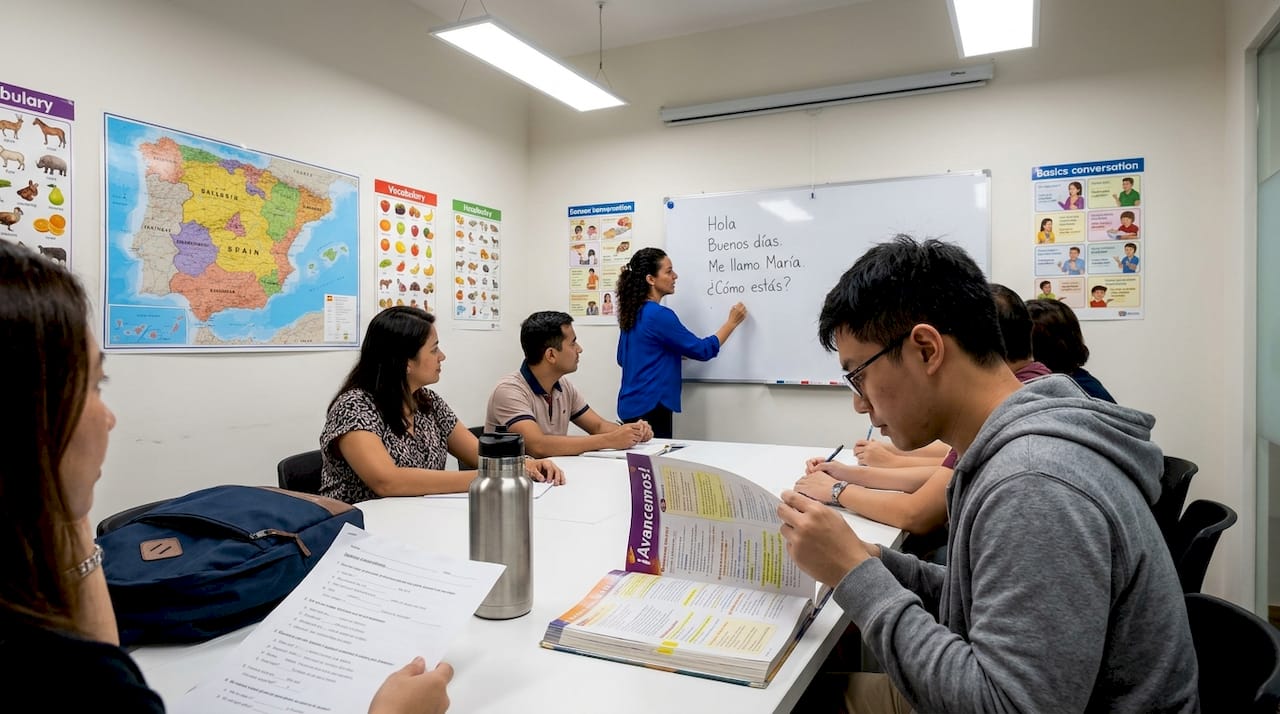
Pro Tip: Create micro-immersion routines outside of class. Change your phone language to Spanish, follow Spanish-language social media accounts, and watch one Spanish-language show per week with subtitles. These small habits compound quickly and fill the immersion gap.
Grammar is another common sticking point, especially for adult learners who want to understand the rules, not just memorize phrases. Learning Spanish grammar for adults through techniques that explain the logic behind verb conjugation and sentence structure tends to produce more durable learning than rote repetition alone.
From classroom to real conversation: making Spanish practical
Classroom learning is the foundation, but your goal is real conversation. The gap between “I studied Spanish for a year” and “I can actually hold a conversation” is bridged by deliberate, consistent practice outside of structured lessons.
Here’s a practical sequence for taking your classroom Spanish into the real world:
- Immediately apply new vocabulary: After each class, use three new words or phrases in a written sentence before the day ends. This forces active recall rather than passive recognition.
- Find a conversation partner: Language exchange apps like Tandem or HelloTalk connect you with native Spanish speakers learning English, making it a mutually beneficial arrangement.
- Simulate real scenarios: Practice ordering food, making appointments, or describing your day in Spanish to yourself. Narrating daily tasks in the language builds fluency faster than most people expect.
- Record yourself speaking: Listening back reveals pronunciation habits and hesitation patterns that are hard to catch in the moment.
- Attend Spanish-speaking events: Singapore has a growing Latin and Spanish-speaking community through cultural events, meetups, and networking groups.
Beyond structured practice, some activities make the learning feel natural and enjoyable rather than like homework:
- Watch Spanish-language films with Spanish subtitles (not English), which trains your ear and reading simultaneously.
- Listen to Spanish podcasts designed for learners, such as “Coffee Break Spanish” or “SpanishPod101,” during commutes.
- Read simple Spanish children’s books or short news articles to build reading fluency without overwhelming your vocabulary.
- Join a Spanish conversation group, many of which meet regularly in Singapore.
Improved speaking interaction after structured classroom intervention reinforces that the classroom itself has real, measurable value for real-world conversation, not just test performance. The key is viewing class time as the launchpad and real conversation as the destination. Finding the right Spanish speaking practice ideas for your Singapore context helps you stay consistent between lessons.
For learners who want a broader roadmap, exploring the different ways to learn Spanish helps clarify which combination of methods suits your lifestyle and goals. And for those who want to make practice feel less like studying, practical Spanish activities tailored to Singapore-based learners offer ideas that fit easily into a busy schedule.
Why non-immersive learning works better than you think
Here’s a perspective that doesn’t get nearly enough attention: immersion is not the starting point for language success. It’s a accelerant for skills you’ve already built. Dropping a complete beginner into a Spanish-speaking country without prior structure often leads to frustration, not fluency. Real immersion works best when you already have a framework to hang new input onto.
What Singapore actually offers is something underrated: a focused, distraction-free learning environment where you control the pace and context. You’re not overwhelmed by input you can’t process. You’re building deliberately, layer by layer.
Data from structured Spanish interventions shows noticeable gains in speaking ability without any immersion environment, which dismantles the assumption that you need to “live the language” to progress. What you actually need is consistent, guided practice with expert feedback and a curriculum designed for your goals.
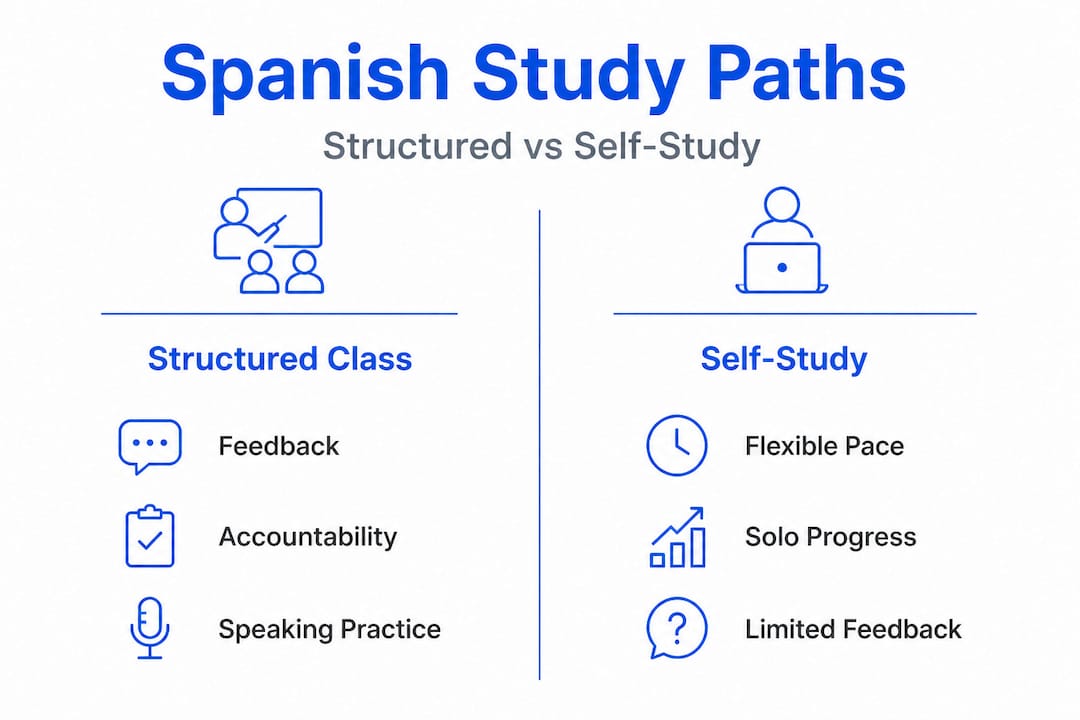
The Singaporean learner also brings a hidden advantage: a naturally analytical approach to language learning, shaped by navigating multiple languages from childhood. This means adults here often internalize grammatical patterns faster than they expect once those patterns are explained clearly in a structured class. A structured teaching approach for fluency is designed precisely to activate this analytical edge.
The uncomfortable truth is that most people who fail at language learning don’t fail because of their environment. They fail because they lack consistency, clear goals, and quality instruction. Fix those three things, and geography becomes almost irrelevant.
Take the next step with Spanish in Singapore
You’ve read the evidence, understood the challenges, and seen that real progress is absolutely achievable here in Singapore without immersion. The next move is finding the right learning format for your goals and schedule.

Spanish Explorer offers a range of options designed for learners at every stage. Whether you’re starting from zero or looking to break through a conversational plateau, the structured Spanish courses cover all proficiency levels with DELE-aligned curricula and experienced, certified instructors. If you prefer a more personalized pace, private Spanish lessons let you focus on exactly the skills you need most. And if your schedule is unpredictable or you work remotely, online Spanish classes bring the same quality instruction to wherever you are. The path to understanding Spanish starts with one good class.
Frequently asked questions
Can I become fluent in Spanish without living abroad?
Yes. Structured instructional models show that you can significantly improve Spanish proficiency in non-immersive settings, making fluency achievable from Singapore with consistent effort and quality instruction.
How long does it take to understand conversational Spanish?
With consistent structured learning, many learners reach a basic conversational level within 6 to 12 months. Singaporean learners using flipped-learning showed measurable speaking improvements in even shorter study periods.
Is it harder for adults to learn Spanish in Singapore?
Adults face unique challenges like competing schedules and limited immersion, but structured, goal-oriented classes designed for Singapore’s context give adult learners a clear framework that actually works with their analytical thinking style.
Are online Spanish lessons effective in Singapore?
Absolutely. Flipped-learning interventions with Singaporean students demonstrated real speaking score improvements, and online structured classes replicate these benefits when paired with regular speaking practice outside of lessons.
Recommended
- Best Spanish learning resources in Singapore for every learner
- Unlock the benefits of learning español in Singapore
- Learning Spanish the easy way: A guide for Singapore adults
- Build Spanish Vocabulary Fast: A Singapore Learner’s Guide
Start Learning Spanish Today
Book a trial class and see how quickly you can progress with a professionally trained native-speaker teacher guiding the way.
Book a Trial Class