

TL;DR:
- Conversational Spanish demands real-time understanding and responses, distinct from reading or writing skills.
- Focusing on interaction, pronunciation, fluency, and contextual practice accelerates speaking ability notably in Singapore.
You’ve studied Spanish vocabulary lists, memorized verb conjugations, and can read a menu without blinking. Then someone in Barcelona asks you a simple question, and your mind goes blank. This gap between understanding Spanish and actually speaking it is one of the most frustrating experiences language learners face. Conversational Spanish is a distinct skill set, separate from reading or writing, and building it requires a targeted approach. This article breaks down exactly what it means, which skills matter most, and what methods work for learners right here in Singapore.
Table of Contents
- Defining conversational Spanish: Beyond textbooks
- Core skills of conversational Spanish: What really matters?
- How Singaporeans can boost conversational skills: Evidence-based methods
- Real-world benefits of conversational Spanish in Singapore
- Why most Spanish learners stall (and how Singapore’s approach flips the script)
- Next steps: Level up your conversational Spanish in Singapore
- Frequently asked questions
Key Takeaways
| Point | Details |
|---|---|
| Conversation skills distinct | Conversational Spanish focuses on real-life speaking and listening, not just grammar or reading. |
| Proven methods work | Research in Singapore confirms that interaction-based practice measurably improves speaking ability. |
| Focus on interaction | Deliberate, frequent speaking practice is the key to developing true conversational confidence. |
| Start small, see gains | Even beginners can make rapid progress with targeted conversation strategies. |
Defining conversational Spanish: Beyond textbooks
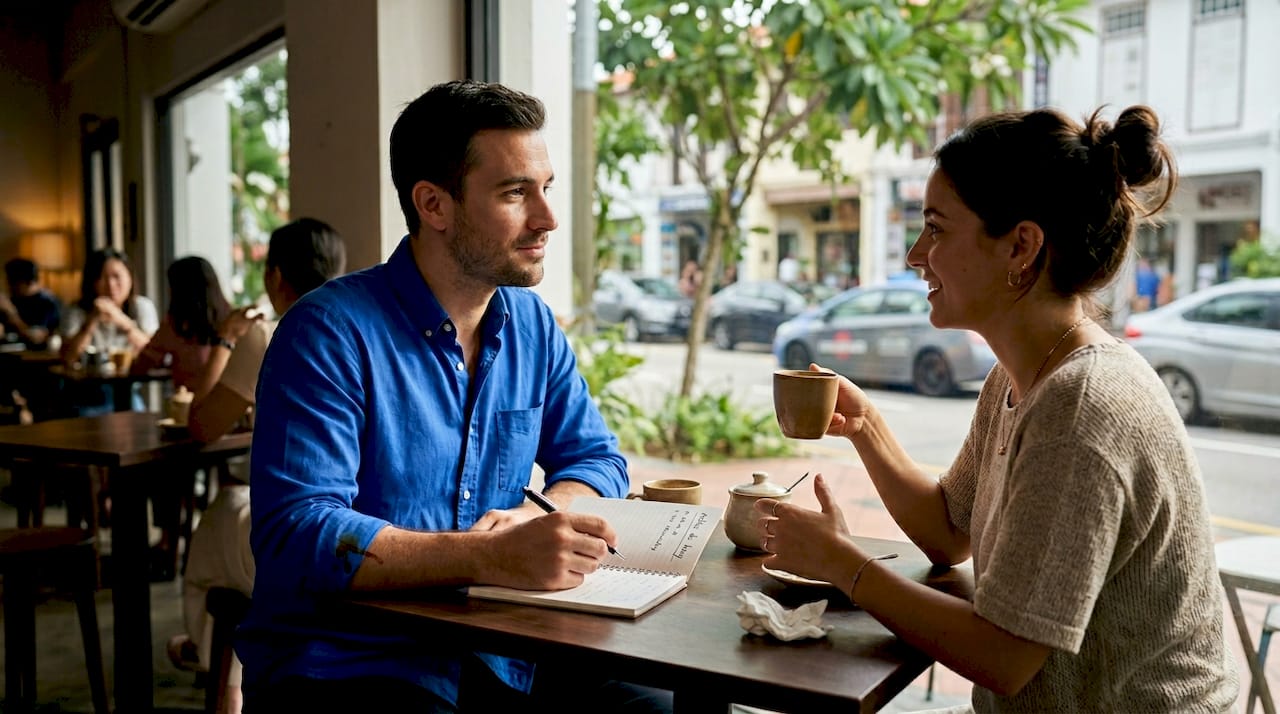
Conversational Spanish is the ability to understand and respond in real-time exchanges with other people. That sounds straightforward, but it’s genuinely different from what most textbooks teach. Traditional Spanish courses often prioritize written grammar exercises, vocabulary memorization, and reading comprehension. Those are valuable, but they don’t automatically translate into spoken fluency.
Think about what a real conversation actually requires. When someone speaks to you in Spanish at normal speed, you have about two seconds to process what they said, retrieve a relevant response, form grammatically reasonable sentences, and actually say them out loud. Textbook exercises give you unlimited time. Real conversations don’t.
Common real-world scenarios where conversational Spanish is tested include:
- Making small talk with a colleague at an international conference
- Ordering food at a restaurant in Mexico City or Madrid
- Asking for directions in a Spanish-speaking neighborhood
- Clarifying a question during a business meeting with a Latin American partner
- Chatting with locals when traveling through Colombia or Spain
One important thing to understand is that comprehension almost always develops faster than speaking ability. You may be able to follow a Spanish podcast before you can hold a five-minute conversation. This is completely normal, but it means that if you want to speak well, you have to practice speaking specifically. Research supports this directly. Empirical evidence from a Singapore context confirms that “‘conversational’ often lags comprehension; targeted instruction measurably improves interaction.”
Conversational Spanish isn’t a natural extension of knowing grammar. It’s its own skill, and it rewards deliberate practice far more than passive review.
The good news is that learning Spanish effectively doesn’t require years before you can hold a basic conversation. With the right focus, beginners can reach a functional conversational level within months.
Core skills of conversational Spanish: What really matters?
Once you understand the distinction between academic and conversational Spanish, the next step is knowing which skills to build. There are four core areas that determine how well you perform in real-life Spanish exchanges.
| Skill | What it means | Example in practice |
|---|---|---|
| Pronunciation | Being understood by a native speaker | Saying “buenas tardes” clearly without hesitation |
| Fluency | Speaking with reasonable flow and pace | Describing your weekend without long pauses |
| Listening comprehension | Processing spoken Spanish in real time | Understanding a fast-paced question at a café |
| Interaction | Managing the back-and-forth of dialogue | Asking for clarification when you miss something |
Each skill feeds the others. Better listening makes you faster at responding. Better pronunciation reduces misunderstandings. More interaction experience builds fluency naturally over time.
Among Singaporean Spanish learners, research showed measurable improvement when lessons deliberately targeted speaking interaction. Flipped-learning instruction improved speaking skills among Singaporean A2 learners, with mean speaking scores rising significantly after just 11 weeks of focused practice. This is powerful evidence that the method of teaching matters just as much as the content.
Key conversational sub-skills worth targeting:
- Initiating conversations: Starting a chat without waiting to be spoken to first
- Turn-taking: Knowing when to speak and when to listen
- Asking for clarification: Phrases like “¿Puedes repetirlo?” (Can you repeat that?) are real lifelines
- Repairing communication breakdowns: Recovering gracefully when you don’t understand
- Using filler words naturally: “Bueno,” “pues,” and “o sea” help you sound natural while thinking
Brushing up on your Spanish grammar techniques for adults is useful, but grammar alone won’t get you through a real conversation. The spoken dynamics are what count.
Pro Tip: Don’t stress about having a perfect Spanish accent. What matters is being understood. Native speakers in Spain, Mexico, Argentina, and Colombia all sound different from each other. Clarity and confidence matter far more than accent perfection.
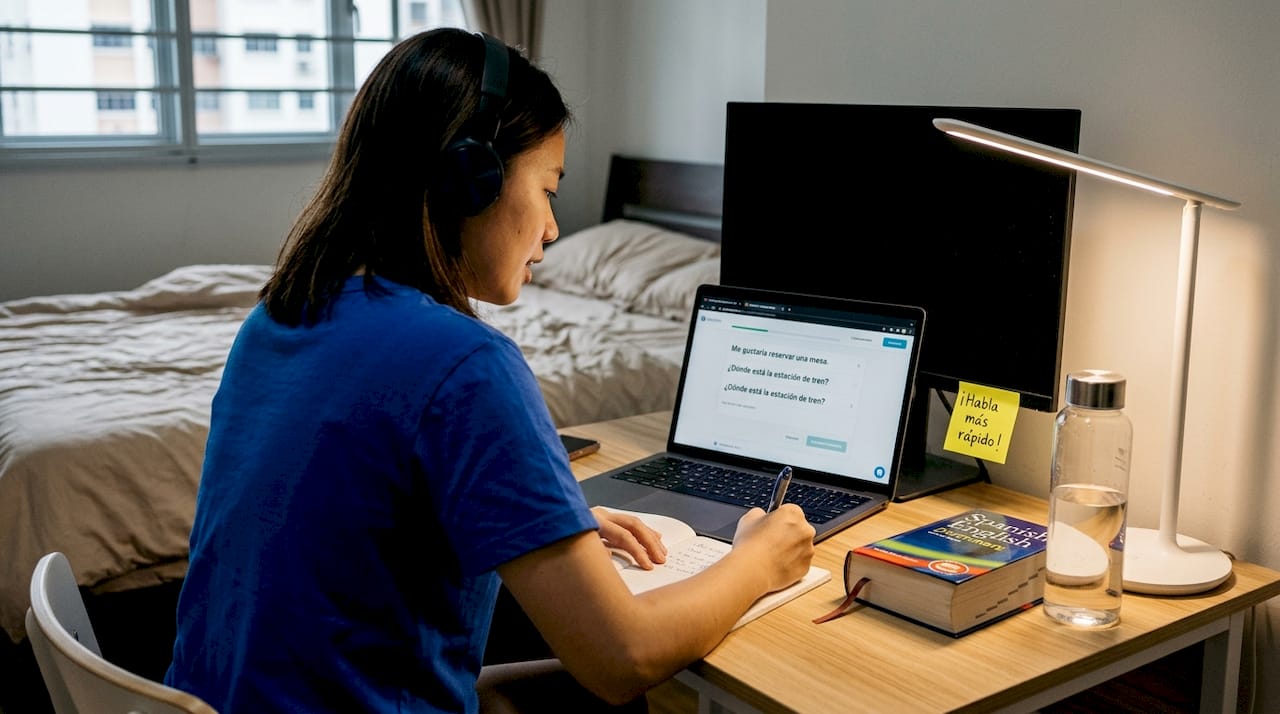
For ideas on building these skills outside the classroom, a curated list of speaking practice ideas specifically for Singapore learners can give you a strong starting point.
How Singaporeans can boost conversational skills: Evidence-based methods
Knowing what skills to build is one thing. Knowing how to build them efficiently is another. Here’s what research and experience consistently show works best for Singapore-based learners.
Many people assume that listening to Spanish music, watching telenovelas, and reading Spanish news is enough. Passive exposure helps, but it doesn’t replace active speaking practice. The brain processes language very differently when you are producing it versus simply receiving it. Speaking requires retrieval, real-time processing, and confidence under mild social pressure. None of that comes from passive listening alone.
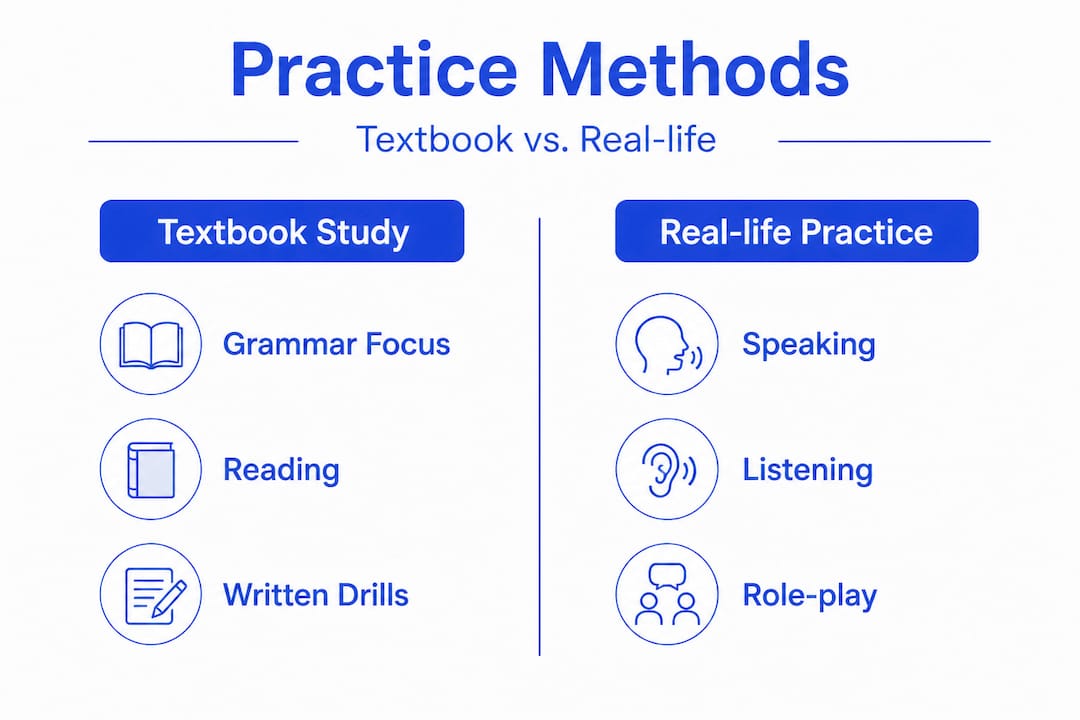
Comparing common learning approaches:
| Method | Strengths | Weaknesses |
|---|---|---|
| Textbook study | Strong grammar foundation | No real-time speaking practice |
| Passive listening | Builds comprehension and vocabulary | Doesn’t train speaking muscles |
| Conversation clubs | Real interaction practice | Variable quality and consistency |
| Flipped-classroom programs | Speaking is the core focus | Requires commitment and active participation |
| Private tutoring | Personalized, targeted feedback | Can be costly without a structured program |
Singapore-based research offers compelling evidence for interaction-driven methods. Flipped-learning improved A2 students’ speaking interaction scores in a Singapore context, showing that structured classes built around live conversation outperform passive approaches significantly.
Here’s a practical step-by-step approach for boosting your conversational Spanish in Singapore:
- Start with structured classes that prioritize speaking alongside grammar. Look for programs that include live discussion activities, not just written exercises.
- Commit to speaking from day one. Even imperfect sentences in your first week build the mental pathways you need for fluency later.
- Seek out conversation partners. Language exchange apps, Spanish-speaking expat communities, and school classmates all count.
- Record yourself speaking Spanish once a week. You’ll spot pronunciation patterns and areas to work on that you’d miss in the heat of conversation.
- Simulate real scenarios. Practice ordering coffee in Spanish, introducing yourself to a new acquaintance, or describing your job in Spanish. Specific scenarios build specific fluency.
- Use targeted activities designed for Singapore learners. Practical Spanish activities built around local contexts can make practice feel relevant and engaging.
If you’re wondering where to start with all of this, learning Spanish the easy way offers a structured guide specifically for Singapore adults. For those who prefer flexibility, exploring an online Spanish learning workflow can help you stay consistent with practice between formal lessons.
Pro Tip: Pair up with a classmate or book sessions with a certified tutor for intentional conversation practice. Not just grammar review, but actual dialogue where you respond in real time, make mistakes, and recover. That cycle of attempt, error, and correction is where speaking ability actually gets built.
Real-world benefits of conversational Spanish in Singapore
Building conversational Spanish isn’t just an academic exercise. It has direct, practical benefits for your life, your career, and your confidence. This is especially true if you’re based in Singapore, one of Asia’s most internationally connected cities.
The numbers speak clearly. Among Singaporean learners who underwent focused speaking interaction practice, mean speaking scores rose from 2.4 to 3.6 after targeted interaction practice. That’s a 50% improvement in a single course cycle. It’s not theoretical. These are real learners in Singapore getting measurably better at speaking through the right methods.
Here’s what conversational Spanish opens up for you:
- Travel confidence: Spanish is the second most spoken language in the world by native speakers, covering more than 20 countries across Europe, Latin America, and beyond. Being able to have real conversations transforms your travel experience from tourist to genuine participant.
- Professional networking: Singapore is a hub for business connections with Latin American and Spanish markets. Spanish-speaking professionals stand out when engaging with clients, partners, and colleagues from those regions.
- Cultural access: Spanish literature, film, music, and cuisine are globally influential. Understanding the language gives you deeper access to those cultural experiences.
- Language confidence: The skills you build in Spanish often transfer to how you approach communication generally. Learners frequently report feeling more confident in other social and professional situations after developing a second language.
- Academic opportunities: Spanish is accepted for certain international qualifications, and DELE-aligned study opens doors to recognized certifications.
To explore this further, the full breakdown of benefits of Spanish in Singapore covers how these advantages play out in real professional and personal contexts. For those who prefer the flexibility of remote learning, Spanish classes online offer a practical way to keep building skills around a busy Singapore schedule.
Why most Spanish learners stall (and how Singapore’s approach flips the script)
Here’s an uncomfortable truth most language schools won’t tell you: most people who study Spanish for two or three years are still not conversational. They can pass a grammar quiz. They can read a news article with a dictionary. But put them in a live conversation and they freeze. Why?
Because they spent those years studying about Spanish, not practicing in Spanish.
The conventional approach to language education prioritizes mastery of rules before application. You learn tenses, drill vocabulary, and complete workbook exercises. Speaking comes last, almost as a reward for mastering the written language. That model is backwards for building conversational ability. Real fluency comes from putting yourself in uncomfortable, live exchanges early and often, and building your ability to manage those exchanges under pressure.
What makes Singapore’s research-backed approach different is the emphasis on interaction as the core activity, not the finishing touch. Instruction targeting interaction leads to real conversational gains, even for beginners. The flipped-learning model, where speaking tasks and live practice come first and grammar explanation serves the conversation, produces better outcomes than the grammar-first approach almost every time.
The practical lesson for you is simple: if your current learning approach is mostly reading, watching, and doing written exercises, you are building a passive relationship with Spanish. You will understand more and more without ever feeling comfortable speaking. The fix isn’t to study harder. It’s to speak more, sooner, and in structured environments where you get feedback.
For workplaces and corporate contexts, the same principle applies. Structuring workplace Spanish lessons around real professional scenarios, rather than generic grammar units, produces results that employees and employers actually notice. The shift from knowledge-focused to interaction-focused instruction is the single biggest lever available to any Spanish learner.
Next steps: Level up your conversational Spanish in Singapore
Ready to stop studying Spanish and start actually speaking it? The difference between learners who plateau and those who genuinely progress comes down to one thing: getting the right structure in place before bad habits set in.
At Spanish Explorer, our courses are built around exactly the principles this article covers. We prioritize live interaction, certified instruction, and a curriculum aligned with DELE international standards. Whether you’re starting from zero or picking up from a previous attempt, we have a format that fits your schedule and goals. Explore our full range of Spanish language courses for group and structured learning options. If you prefer learning from home, our online Spanish classes deliver the same interaction-focused methodology with maximum flexibility. For one-on-one, personalized instruction, our Spanish private classes give you dedicated attention and a curriculum tailored to your exact goals.
Frequently asked questions
Is conversational Spanish different from fluent Spanish?
Yes, conversational Spanish means being able to interact clearly in real-life situations, even if you aren’t fully fluent. Fluency is a higher level that involves breadth, speed, and nuance across many contexts.
How long does it take to become conversational in Spanish?
With focused, interaction-driven practice, noticeable improvement is possible in a few months. Mean speaking scores rose significantly after just 11 weeks of focused interaction practice among Singapore learners.
Are there effective ways to practice conversational Spanish in Singapore?
Yes, interactive courses, conversation clubs, and flipped-learning classes all help Singapore learners develop real speaking confidence. Flipped-learning methods specifically improved speaking outcomes for Singaporean Spanish learners in recent research.
What is the flipped learning approach for Spanish speaking?
Flipped learning means prioritizing live speaking interaction over traditional grammar lectures, so you spend more classroom time actually conversing. Flipped-classroom approaches led to higher speaking scores among Singaporean learners compared to conventional instruction methods.
Sorry, the comment form is closed at this time.