 Spanish
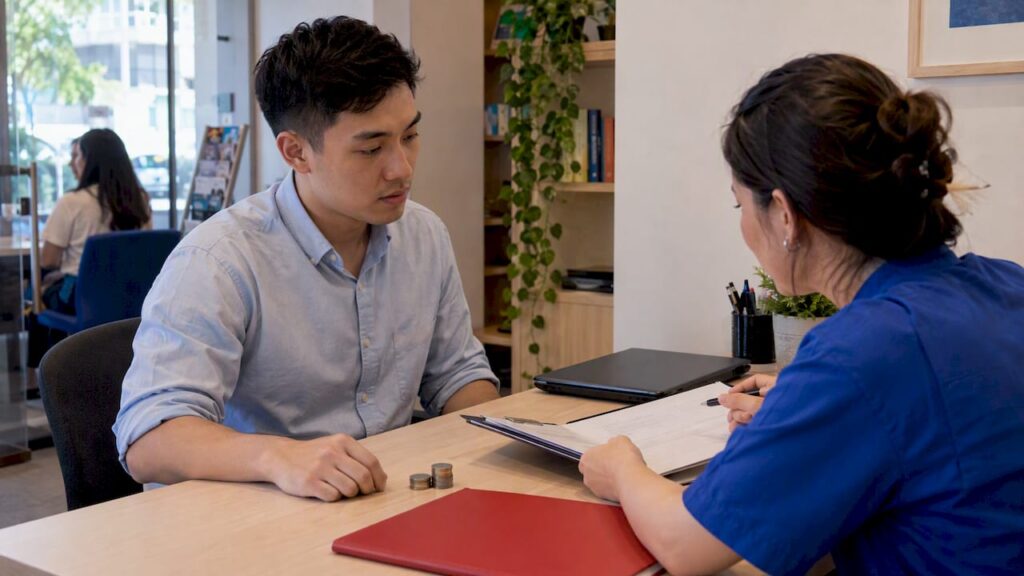
Expect to pay a few hundred Singapore dollars for the official DELE exam fee, which varies by level and is set by Instituto Cervantes, plus a separate prep budget that can range from a modest group course to a fuller private package. Your first move should be checking current fees on a local test centre page or booking a placement test to see how much preparation you actually need.
TL;DR:
- The DELE exam fees in Singapore depend on the CEFR level, with higher levels costing more due to increased exam components.
- Preparation costs vary by format: group courses are cheaper per hour, private lessons are targeted and pricier, and online classes offer flexibility at a moderate rate.
- A focused prep pathway with initial placement testing, structured courses, mock exams, and targeted private sessions improves readiness more effectively than open-ended studying.
- Booking early and combining cheaper online modules with private corrections can save money, especially when a mock exam is included in the package.
- Effective preparation emphasizes real exam-task practice and specific examiner-style feedback over longer, generic courses.
Table of Contents
- Official DELE exam fees and registration from Singapore
- Common DELE preparation options in Singapore and their price ranges
- How to choose the right DELE prep route (practical checklist)
- Cost-saving tips and booking tactics for Singapore candidates
- A practical DELE prep pathway for adult learners in Singapore
- What most DELE prep advice gets backward
- Start your DELE prep with Spanish Explorer
- FAQ
- Sources
Official DELE exam fees and registration from Singapore
The DELE exam itself is administered by Instituto Cervantes, and the fee you pay depends on which CEFR level you’re sitting, from A1 through C2. Higher levels generally carry higher fees because the exam includes more components and longer marking time, but the exact amount changes periodically, so the only reliable number is the one listed on the official registration page at the time you book.
Local institutions in Singapore, including university language departments, often point candidates toward these official fee listings rather than publishing their own figures. The Centre for Language Studies at NUS hosts language program pages that reference DELE exam arrangements for students, and its module catalogue is a useful way to see where structured Spanish instruction is formally offered in Singapore. These institutional pages won’t necessarily show you a live price, but they confirm which local bodies are actively involved in DELE administration and where session announcements typically appear first.
Before you register, pull together a few things so the process doesn’t stall halfway through:
- Valid identification matching the name you’ll use on your certificate.
- A payment method accepted by the registration portal, usually a credit card.
- Confirmation of your chosen exam level and session date.
- Awareness of the registration deadline, which usually closes several weeks before the test date.
Check the local test centre page directly for the current SGD amount, the next available session, and whether any administrative fee applies on top of the base exam cost. Our own DELE Singapore guide walks through the registration steps in more detail if you want a local reference point before you commit to a date.
Common DELE preparation options in Singapore and their price ranges
Preparation costs vary more than the exam fee itself, mostly because the format you choose changes how much instructor time you’re actually buying. Here’s how the main options tend to shake out.
Group courses usually run 8 to 14 weeks and bundle classroom instruction with periodic writing feedback and sometimes a built-in mock exam. They cost less per hour than private lessons because the instructor’s time is shared, which makes them a sensible default if your level is reasonably close to your target.
Private lessons cost more per hour but let you skip whatever you already know and spend the whole session on your weak points. Many learners buy these in bundles of 10 to 20 hours rather than booking one at a time, which usually works out cheaper than paying session by session and keeps your prep on a fixed schedule.
Online group classes and hybrid formats sit between the two on convenience. You trade some of the in-room practice (particularly spontaneous speaking drills) for flexibility, which suits working adults who can’t commit to a fixed weekly slot in person.
- Group course: lower cost per hour, fixed schedule, some writing correction included.
- Private lessons: higher cost per hour, fully customized to your gaps, often sold in hour bundles.
- Online or hybrid: moderate cost, flexible timing, slightly less live speaking practice.
- Mock exam only: a single fee for a full timed paper plus a speaking battery and marking, useful close to test day.
That last option, a standalone mock exam, is worth treating separately from a full course. It tests you under real time pressure across all four skills and gives you marked feedback, which is often the most useful single purchase in the final weeks before your test date.
How to choose the right DELE prep route (practical checklist)
Start by figuring out the gap between where you are now and the level you’re targeting. A learner moving from A2 to B1 needs a shorter runway than one jumping from A2 straight to B2, and that gap should drive how much you spend, not the other way around.

Before signing up with any provider, ask a few direct questions: how often do they run mock exams, can they show you a sample of their written corrections, how large are their classes, and have their instructors actually sat or examined the DELE. Also check their cancellation and rescheduling terms, since exam dates sometimes shift.
Whatever format you pick, make sure it includes real exam-task practice: timed speaking rounds, writing pieces marked against the actual DELE rubric, and feedback that sounds like what an examiner would say, not generic encouragement.
- Take a placement test to confirm your current level.
- Shortlist two providers that offer the format matching your timeline and budget.
- Book a trial class or single mock exam with each before committing to a full package.
- Compare the written feedback you receive and pick the one that’s more specific.
Pro Tip: Ask to see one graded writing sample before you pay for a full course. It tells you more about teaching quality than any brochure.
Cost-saving tips and booking tactics for Singapore candidates
Group classes are the better value when your level is already close to the target and you mainly need structured practice and accountability. Private sessions earn their higher rate when you have a specific, narrow gap, like weak oral fluency, that a group pace won’t fix fast enough.
- Buy a multi-session bundle if one is offered rather than paying per class.
- Save mock-only sessions for the final stretch if your grammar is already solid.
- Register and book early, since popular session slots fill up ahead of exam windows.
- Pair a lower-cost online module with one or two private correction sessions for targeted feedback.
- Check whether a package already includes a mock exam or graded writing, since buying these separately later often costs more overall.
A practical DELE prep pathway for adult learners in Singapore
A realistic path looks like this: start with a placement test, follow an 8 to 14 week group or hybrid course matched to your level, sit a scheduled mock exam partway through, add one or two private sessions to fix whatever the mock exposed, then finish with a final mock before registering for the real test. Spanish Explorer’s DELE preparation plans are structured around exactly this kind of 8 week, 10 to 14 week, or multi-month timeline.
Some language schools offer DELE-aligned curricula taught by native Spanish-speaking instructors fluent in English, with group, private, online, and corporate formats available at central Singapore locations. You can see the full course breakdown on the DELE exam page.
A short, structured pathway, placement, then focused weeks of targeted prep, then a mock exam, then final corrections, balances cost and readiness better than an open-ended course with no checkpoints.
What most DELE prep advice gets backward
Most guidance on this topic treats the exam fee as the number that matters and the prep budget as an afterthought. In practice it’s the reverse. The exam fee is fixed and small relative to total spend; the real decision is how much structured practice you buy and whether it matches your actual gap.
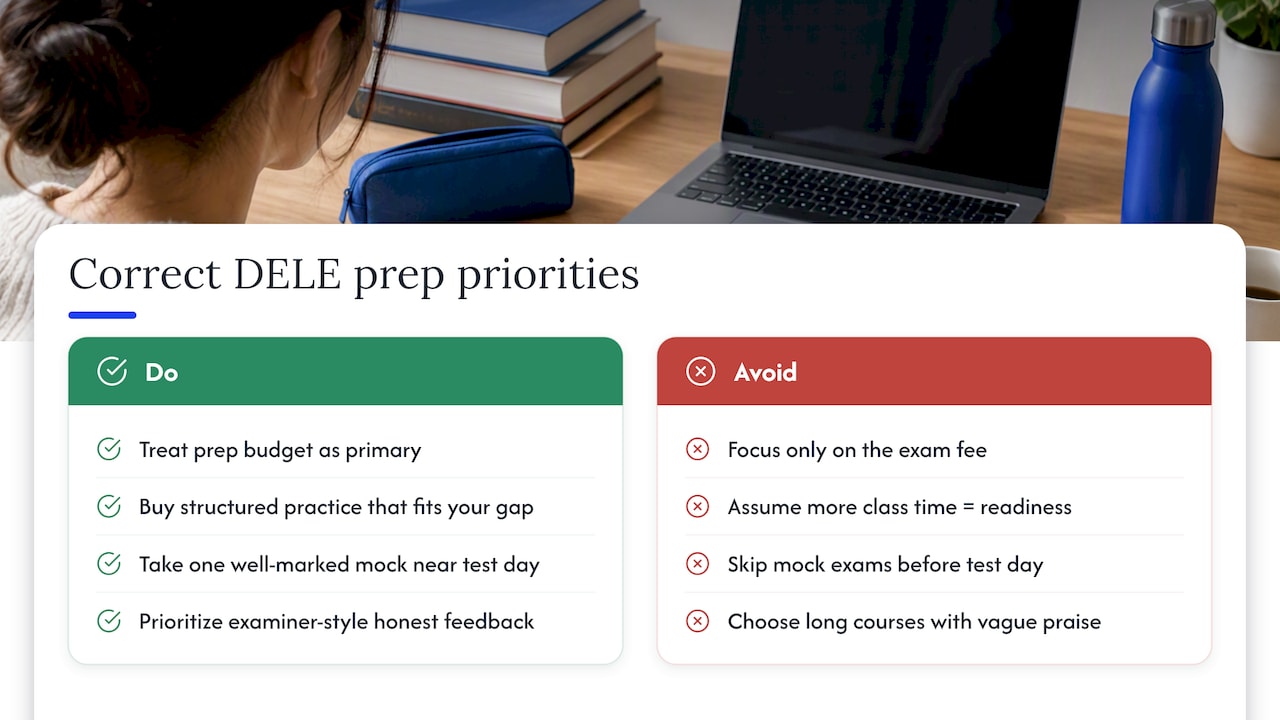
The conventional advice to “just take a course” also undersells mock exams. A single well-marked mock, taken close to test day, often tells you more about your readiness than another month of general classes. If your grammar and vocabulary are already solid, that single assessment is worth more than extra seat time.
Prioritize honest feedback over course length. A shorter plan with sharp, examiner-style corrections beats a longer one with vague encouragement, and it usually costs less too.
— Paul
Start your DELE prep with Spanish Explorer
Spanish Explorer offers DELE-aligned prep in group, private, online, and corporate formats from its location at 10 Anson Road, Level 22, International Plaza, right above Tanjong Pagar MRT.
If you’re not sure which format fits your timeline, a Spanish Language Trial Class is a low-cost way to test the teaching style before booking a full DELE prep course.
FAQ
How much does it cost to take the DELE exam?
The official exam fee is set by Instituto Cervantes and varies by CEFR level, with higher levels generally costing more. Check the current amount in SGD on the official registration portal or a local test centre page before booking, since fees are updated periodically.
How much does DELE prep typically cost in Singapore?
Prep costs depend heavily on format: group courses spread instructor time across a class and cost less per hour, while private lessons cost more per hour but target your specific gaps. Spanish Explorer’s private class packages for DELE prep at elementary, intermediate, or business levels are priced as published by the provider.
How can I prepare for the DELE exam?
Effective prep combines structured grammar and vocabulary building with repeated exam-task practice: timed speaking rounds, writing pieces marked against the real rubric, and at least one full mock exam. Group classes, private lessons, and hybrid online formats can all deliver this if the provider includes genuine corrections, not just generic practice.
Can I take the DELE exam online?
The DELE exam is administered through official Instituto Cervantes test centres rather than as a fully remote test, so candidates in Singapore register through an accredited local centre. Preparation, on the other hand, can be done through online or hybrid classes even if the exam itself is sat in person.
Sources
Recommended
Start Learning Spanish Today
Book a trial class and see how quickly you can progress with a professionally trained native-speaker teacher guiding the way.
Book a Trial Class